Leave Your Message
Selecting the right Choke Core supplier can determine whether a power system remains quiet, stable, and dependable in 2026. Global buyers now examine more than price. They compare core materials, impedance curves, thermal behavior, dimensional consistency, and delivery performance.
EMC authority Henry W. Ott stated, “The best way to solve an EMI problem is not to have one in the first place.” His principle remains practical for engineers choosing common-mode and differential-mode choke components. A reliable supplier should provide traceable material data, verified loss measurements, production samples, and clear testing methods. It should also explain performance at real operating frequencies, not only at room temperature.
This guide reviews leading Choke Core suppliers for international purchasing teams. It considers manufacturing experience, quality systems, customization capacity, export readiness, and technical support. Some suppliers look impressive on paper. The factory audit may tell another story. Buyers should request samples, inspect winding compatibility, and compare actual impedance results before approving volume orders. That takes time.
Small details matter. A slight dimensional error can affect assembly clearance. Poor ferrite consistency can increase heat and weaken filtering performance. Certifications are useful, but they do not replace independent verification. This review also recognizes an uncomfortable point: no supplier is perfect for every application. The best choice depends on frequency range, current load, insulation design, budget, and delivery risk. Specifications can change. Supply conditions can shift. Careful evaluation remains essential.
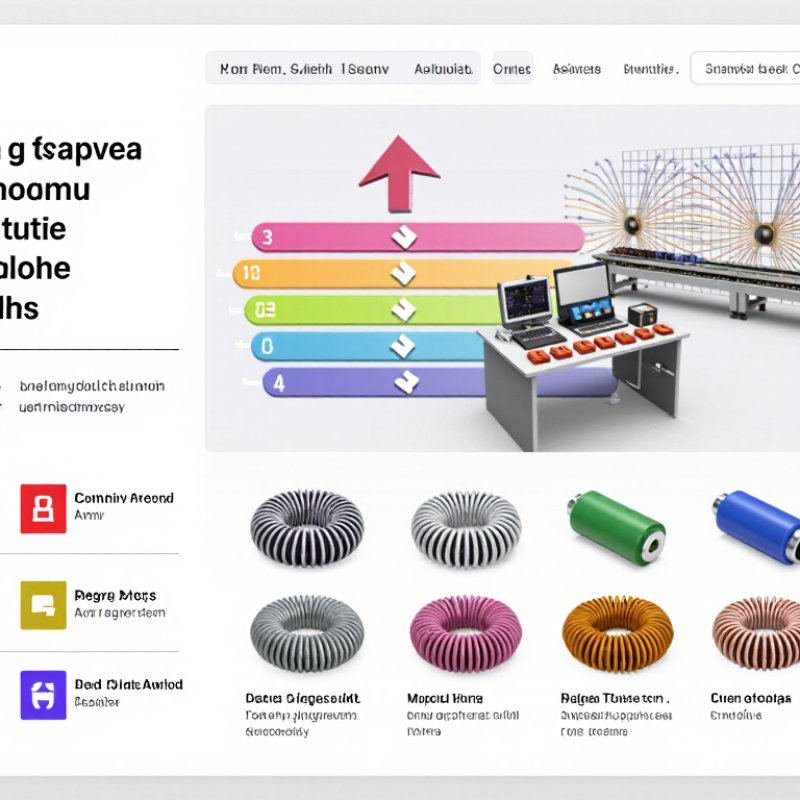
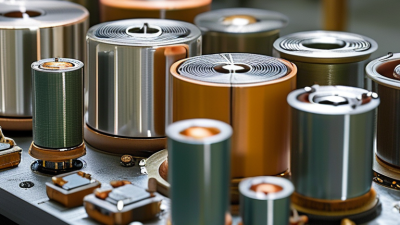
Choke cores are magnetic components that help control unwanted current in power circuits. They are central to common-mode and differential-mode chokes. In a charger, inverter, or server power supply, the core guides magnetic flux and weakens high-frequency noise. That protection supports electromagnetic compatibility and reduces interference with nearby control circuits. Small detail. Core selection matters.
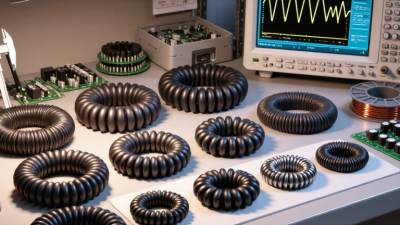
Ferrite cores suit many high-frequency applications because they offer low losses and useful permeability. Powdered cores can handle stored energy better in some differential inductors. Nanocrystalline materials may provide strong impedance across a broad frequency range. The correct choice depends on switching frequency, current, temperature, and insulation requirements. A core that performs well at 25°C may behave differently near 100°C. This is where practical testing becomes essential.
Global buyers should request impedance curves, saturation data, loss figures, dimensional tolerances, and batch traceability from potential suppliers. Samples should be tested with the intended winding, wire size, and operating waveform. A datasheet can look complete, yet missing thermal details may create costly redesigns. Engineers should also inspect edge finish and coating quality, especially when automated winding is used. I have found that early supplier discussions often reveal more than a polished catalog. Still, measurements can disagree with expectations. That is worth reviewing, not hiding.
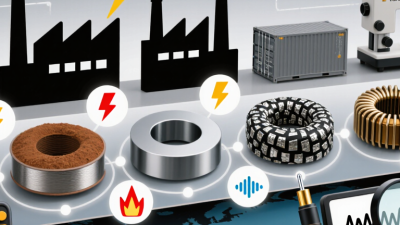
Material and sourcing benchmark for evaluating choke-core suppliers without relying on company or brand information.
| Core Material | Typical Operating Frequency | Indicative Saturation Flux Density | DC-Bias Performance | Main Advantages | Typical Choke Applications | Recommended Supplier Capabilities | Key Buyer Verification Items |
|---|---|---|---|---|---|---|---|
| MnZn Ferrite | Approximately 10 kHz–500 kHz, depending on grade and design | Typically about 0.30–0.50 T at room temperature | Moderate; air gaps are commonly used for energy storage and current-bias control | Low core loss High permeability Cost-effective | Switch-mode power supplies, EMI filters, PFC inductors, common-mode chokes | Controlled ferrite formulation, accurate grinding, repeatable gap tolerance, automated dimensional inspection | Core-loss curves at the target frequency and temperature, initial permeability, gap tolerance, AL value, insulation quality |
| NiZn Ferrite | Approximately 1 MHz–100 MHz and above for suitable grades | Typically about 0.20–0.35 T | Limited for high-energy storage; generally selected for high-frequency impedance behavior | High resistivity Low eddy-current loss High-frequency suitability | High-frequency EMI suppression, signal-line filtering, RF-related chokes | High-frequency material characterization, precision molding, stable impedance control, clean surface finishing | Impedance-versus-frequency data, material resistivity, temperature stability, dimensional tolerance, mechanical strength |
| Nanocrystalline Alloy | Commonly about 20 kHz–500 kHz; application range depends on core size and winding design | Typically about 1.0–1.3 T | Very good when correctly designed with a distributed or engineered air gap | High permeability High flux density Excellent common-mode performance | High-current common-mode chokes, renewable-energy inverters, EV charging equipment, industrial power converters | Controlled annealing, precise strip processing, low-burr cutting, robust insulation systems, high-current testing | Permeability under bias, core-loss data, thermal aging results, insulation system, winding-window dimensions, noise performance |
| Amorphous Alloy | Commonly about 10 kHz–100 kHz, with the usable range depending on the alloy and loss target | Typically about 1.4–1.6 T | Good for high-current magnetic components when the gap and thermal design are optimized | High saturation flux Low hysteresis loss High-current capability | Power-factor correction, high-power inductors, industrial converters, grid-connected power electronics | Stable rapid-solidification process, controlled heat treatment, edge protection, large-core handling, thermal validation | Core-loss performance at operating temperature, saturation behavior, mechanical integrity, thermal rise, gap consistency |
| Powdered Iron | Approximately 20 kHz–500 kHz, depending on powder type, permeability and core geometry | Often about 0.80–1.20 T, depending on composition and processing | Good; distributed-gap behavior supports energy storage and gradual saturation | Good DC-bias tolerance Distributed air gap High energy storage | Output inductors, boost inductors, DC-link filtering, buck and boost converter energy-storage inductors | Consistent powder mixing, controlled pressing density, low-crack production, coating uniformity, inductance testing under bias | Inductance-versus-current curves, temperature rise, permeability tolerance, coating integrity, mechanical strength |
| Sendust / Metal-Powder Alloy | Approximately 20 kHz–300 kHz for many power-inductor designs | Often about 0.80–1.00 T, depending on alloy and compaction process | Good to very good; gradual saturation is suitable for ripple-current applications | Low audible noise Low core loss Stable DC bias | Output chokes, boost inductors, telecom power supplies, automotive and industrial converters | Uniform powder distribution, controlled compaction, low-loss formulation, automated inductance and loss testing | Core-loss data under actual ripple conditions, DC-bias curves, thermal cycling, dimensional consistency, RoHS and REACH documentation |
| Common-Mode Choke Core Set | From low-frequency conducted EMI ranges to several hundred kilohertz; design-specific | Selected primarily for impedance and common-mode attenuation rather than maximum energy storage | Depends on material, winding arrangement and applied common-mode current | EMI attenuation High impedance Noise reduction | AC input filters, motor drives, solar inverters, battery chargers, data and communication power interfaces | Matched core pairs, controlled permeability, low interwinding capacitance design support, hipot and insulation testing | Common-mode impedance, differential-mode behavior, leakage inductance, capacitance, temperature rise, safety spacing |
Note: The electrical values shown are engineering reference ranges rather than guaranteed specifications. Actual performance depends on material grade, core geometry, air gap, winding configuration, temperature, excitation waveform and production tolerances. Global buyers should request batch-level test reports, technical drawings, material declarations and reliability data before approval.