inquiry
Leave Your Message

How to Choose the Right High Power Switch?

Choosing the right High Power Switch is rarely a simple matter of matching voltage and current ratings. In real installations, heat, switching frequency, load behavior, enclosure space, and maintenance access can change the decision completely. A switch that performs well on a test bench may fail under dust, vibration, repeated surges, or poor ventilation. Small details matter.

Dr. Bimal K. Bose, a recognized power electronics authority, described the field as “the technology associated with the efficient conversion, control, and conditioning of electric power.” His statement gives useful direction: a High Power Switch should not be judged by power capacity alone. Engineers must examine conduction losses, switching losses, insulation requirements, arc control, response time, and expected service life. Semiconductor devices may offer fast switching and precise control. Mechanical solutions may provide isolation, visible disconnection, and strong fault tolerance. Neither choice is automatically best.

Context decides.

A reliable selection process begins with measured operating conditions. Record the continuous load, peak inrush current, ambient temperature, fault level, and switching cycles. Then compare datasheet values with actual field demands. This is where experience becomes valuable. Some specifications appear generous but assume ideal cooling or short operating periods. That assumption can be dangerously optimistic. I have seen designs focus on maximum current while overlooking terminal heating and enclosure airflow. That mistake deserves attention. The best High Power Switch balances safety, efficiency, control, installation cost, and long-term serviceability. It should also leave a sensible margin, without creating unnecessary size or expense.
How to Choose the Right High Power Switch?

Define the Application Requirements for a High Power Switch

Choosing a high power switch starts with the load, not the product catalog.

Define voltage, current, and switching frequency under real operating conditions. Record normal demand and brief surges. A motor may draw several times its rated current during startup. That detail can change the required switch rating. Measure it. Do not rely only on a label.

Identify the switching role. Is the device isolating a battery, controlling a heater, or routing industrial power? Each use creates different thermal and electrical stress. Note the load type, duty cycle, ambient temperature, and enclosure airflow. A switch carrying 80 amperes for ten seconds differs greatly from one carrying 80 amperes continuously. Check inrush current, reverse voltage, arc energy, and fault-clearing time. These values guide contact spacing, insulation, and protection design. The safest choice is often less obvious.

Define mechanical requirements before testing samples. Specify terminal size, mounting space, actuation force, service life, and acceptable contact resistance. Verify ratings with independent test data and applicable safety standards. Ask how performance changes after repeated switching, dust exposure, or heat. Bench tests should use the intended cable length and realistic loads. I once treated a short test lead as harmless; it concealed voltage drop and warmed the connection. That mistake was small, but useful. Leave design margin for tolerances, aging, and unexpected peaks. A written requirement sheet makes comparisons clearer and exposes assumptions that should be challenged.

Compare Switch Types and Their Operating Characteristics

How to Choose the Right High Power Switch?

High power switches differ mainly in speed, losses, isolation, and heat behavior. Electromechanical contactors handle large currents and offer very low resistance when closed. They are suitable for motors, heaters, and battery disconnects. However, their contacts wear over time. Switching can also create arcs and audible noise.

Solid-state relays switch silently and respond quickly. They have no moving contacts, so mechanical wear is less concerning. Their disadvantages are leakage current and continuous heat generation. MOSFET-based switches work well at lower voltages and high switching frequencies. IGBT-based designs often suit higher-voltage loads, especially where moderate switching speed is acceptable. Neither option is perfect. A fast switch may create more electromagnetic interference than expected.

Tips: Check continuous current, surge current, voltage margin, isolation, and cooling space. Measure temperature under real load conditions. A switch that survives a brief test may still overheat during a long operating cycle. Review the load type carefully. Motors and transformers can produce sharp startup currents, while resistive heaters behave more predictably. Use a properly rated fuse or circuit breaker, and confirm the control signal matches the switch input. In practice, engineers sometimes focus too heavily on the maximum current rating. That number alone does not reveal thermal limits, switching losses, or service life.

Evaluate Voltage, Current, and Power Handling Ratings

How to Choose the Right High Power Switch?

A high power switch must match the real voltage, current, and power conditions of your circuit. Check the highest operating voltage, including startup surges and switching transients. A small voltage spike can damage an otherwise suitable device. The current rating also needs careful review. Compare continuous current, peak current, and inrush current separately. Motors, heaters, and capacitive loads may draw far more current during startup. Do not rely on one headline rating.

Power handling involves more than the load wattage. For conductive switches, estimate heat using resistance and current, since heat rises quickly as current increases. Check the datasheet’s test temperature, cooling method, and derating curve. A switch rated for 50 amps in ideal laboratory conditions may perform differently inside a crowded enclosure. Allow practical margin, but avoid choosing an oversized part without checking control requirements, physical space, and switching speed. I have seen designs fail because the steady current looked safe while repeated peaks were ignored.

Tips: Write down the maximum voltage, continuous current, peak current, and expected duty cycle. Then verify each rating under your actual temperature and cooling conditions. Check terminal size and wiring limits too. The switch may survive, but a narrow connection can become the weakest point. If the load changes later, recalculate the margins. A careful spreadsheet helps, though it cannot replace testing. Test under worst-case conditions, including warm enclosure temperatures and frequent switching.

Assess Switching Speed, Thermal Performance, and Safety Features

Choosing a high-power switch starts with the load, not the headline current rating. Switching speed deserves oscilloscope evidence. Compare turn-on and turn-off times under your real voltage, current, gate resistance, and junction temperature. A faster edge is not automatically better. It can reduce switching loss, yet increase ringing, EMI, and insulation stress. The IEA’s Electricity 2024 report estimates that data centers used about 460 TWh in 2022. Demand could exceed 1,000 TWh by 2026. Efficient switching therefore matters, but published figures can hide laboratory assumptions.

Thermal performance often decides long-term reliability. Check RθJC, RθJA, transient thermal impedance, and maximum junction temperature. Then test the actual heatsink, airflow, mounting pressure, and duty cycle. A cool case can still conceal a hot junction. I once treated a generous current rating as sufficient; the switch later overheated during short, repeated pulses. That was a poor assumption. Use thermal cycling data when available, and leave practical margin. Safety features should include undervoltage lockout, overcurrent or desaturation protection, soft shutdown, fault reporting, and galvanic isolation where required. Verify creepage and clearance against IEC 60664-1, while evaluating isolated control devices against applicable IEC 60747 requirements. Do not rely on one protection circuit. Independent hardware shutdown is often worth the extra space.

How to Choose the Right High Power Switch?

Silicon IGBTs typically support lower switching frequencies but offer strong short-circuit ruggedness. Silicon MOSFETs provide fast switching at moderate power levels, while SiC MOSFETs can operate at higher switching frequencies with lower thermal resistance. For safe operation, verify undervoltage lockout, overcurrent or short-circuit protection, gate-drive isolation, and the thermal design of the complete power stage. Values shown are representative device-class figures and are not manufacturer ratings.

Select the Best Switch Based on Installation and Maintenance Needs

How to Choose the Right High Power Switch?

Select the Best Switch Based on Installation and Maintenance Needs

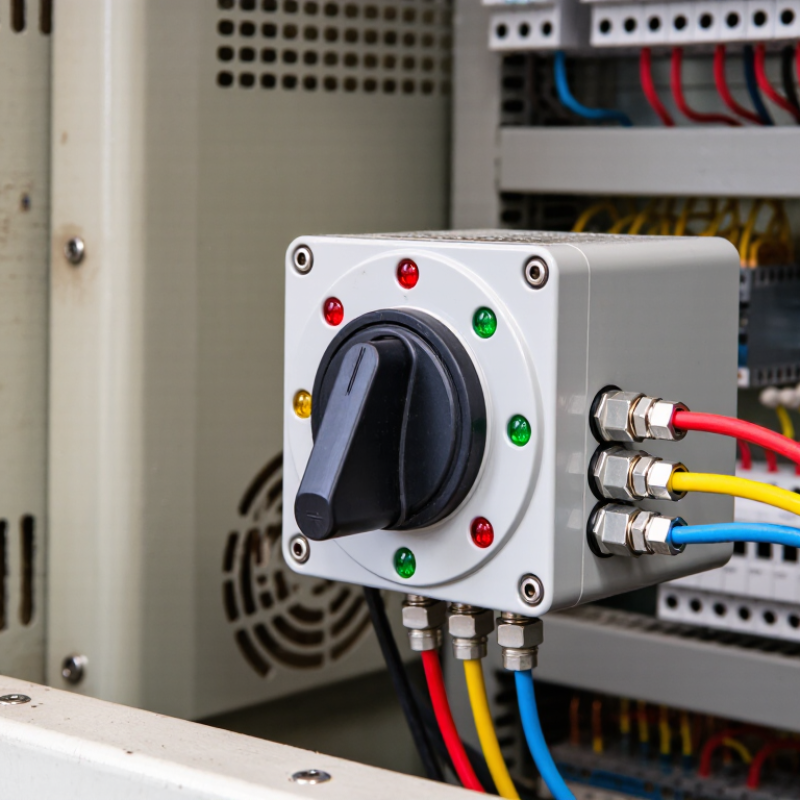
Choosing a high power switch is less about maximum capacity than daily installation reality. Start with load current, voltage, switching frequency, and fault conditions. A switch rated just above the load may overheat during repeated starts. Leave a practical margin, but avoid oversized equipment that complicates wiring and testing. The panel location matters too. Confirm enclosure protection, clearance, ventilation, and cable bending space before ordering.

In field installations, terminal access often determines maintenance time. A serviceable switch should allow safe isolation, visible labeling, and straightforward torque checks. Choose layouts that let technicians inspect connections without removing unrelated components. For dusty or damp rooms, match the enclosure to measured conditions, not assumptions. I once saw a well-rated switch fail early because heat collected above a crowded cabinet. The specification was correct; the installation was not.

Maintenance needs should shape the choice from day one. Check whether contact wear, insulation damage, and loose terminals can be identified during scheduled inspections. Thermal imaging can reveal rising resistance before discoloration appears. Keep replacement parts, wiring diagrams, and test records accessible to authorized personnel. Follow local electrical codes and documented procedures. A smaller switch may be easier to maintain, but that judgment needs site evidence. Do not rely on a catalog rating alone. I still review failed installations, because overlooked access space is an expensive lesson.