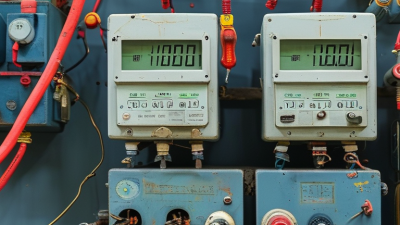
7 Best CT Current Transformers for Global Buyers?
Choosing reliable Ct Current Transformers is not a simple brand comparison. Global buyers must match each transformer with the measurement task, installation environment, and local grid requirements. A device designed for revenue metering may perform poorly in a protection circuit. Small details matter, including rated burden, accuracy class, insulation level, knee-point voltage, and conductor size.
Lord Kelvin, a pioneer of electrical measurement, famously said, “When you can measure what you are speaking about, and express it in numbers, you know something about it.” That principle guides this review. Each selected model is considered through practical factors, not advertising claims alone. We examine measurement accuracy, thermal performance, installation flexibility, documentation, manufacturing consistency, and after-sales support. For international projects, compatibility with IEC or other recognized standards also deserves careful attention.
Real installations are rarely perfect. A cramped switchboard, a long secondary cable, or unexpected temperature changes can affect performance. Split-core designs may simplify retrofitting, but they can introduce accuracy concerns if the core does not close evenly. Protection transformers also require more technical checking than ordinary monitoring units. No shortlist fits every project. That limitation should remain visible.
This guide presents seven Ct Current Transformers for different global purchasing needs. It is intended for engineers, distributors, energy managers, and informed buyers. Before ordering, verify the datasheet, test certificates, terminal arrangement, and required ratio. A confident purchase begins with measured requirements, not a rushed ranking.
What Are CT Current Transformers and How Do They Work?
CT current transformers measure large alternating currents without sending the full current through a meter. A primary conductor passes through the magnetic core, while a secondary winding produces a smaller, proportional current. A 1,000:5 CT, for example, converts 1,000 amperes into 5 amperes for a relay or energy meter. The core transfers magnetic flux. The secondary circuit reads that signal safely. Never leave a CT secondary open while the primary is energized. Dangerous voltage can develop.
Accuracy depends on burden, frequency, saturation, and installation quality. IEC 61869-2 specifies requirements for measuring and protection current transformers, including accuracy classes and performance tests. The IEA Electricity 2024 report projects global electricity demand to grow by an average 3.4% annually through 2026. More grid expansion means more measurement points, but higher demand does not automatically mean better data. A poorly matched CT can distort readings during faults or heavy loads. Real sites are less tidy than laboratory diagrams.
Tips: Check the ratio against the maximum load, not only today’s reading. Confirm the required accuracy class and burden rating. For protection systems, review the knee-point voltage with a qualified engineer. Keep secondary wiring short, secure, and correctly grounded. Field testing matters. In my experience, installation errors often appear before equipment defects. That is easy to overlook. When comparing seven CT options for global use, examine certificates, test records, enclosure ratings, and local service support. A low purchase price may hide calibration and replacement costs.
Seven Leading CT Current Transformers for Global Buyers
Seven Leading CT Current Transformers for Global Buyers
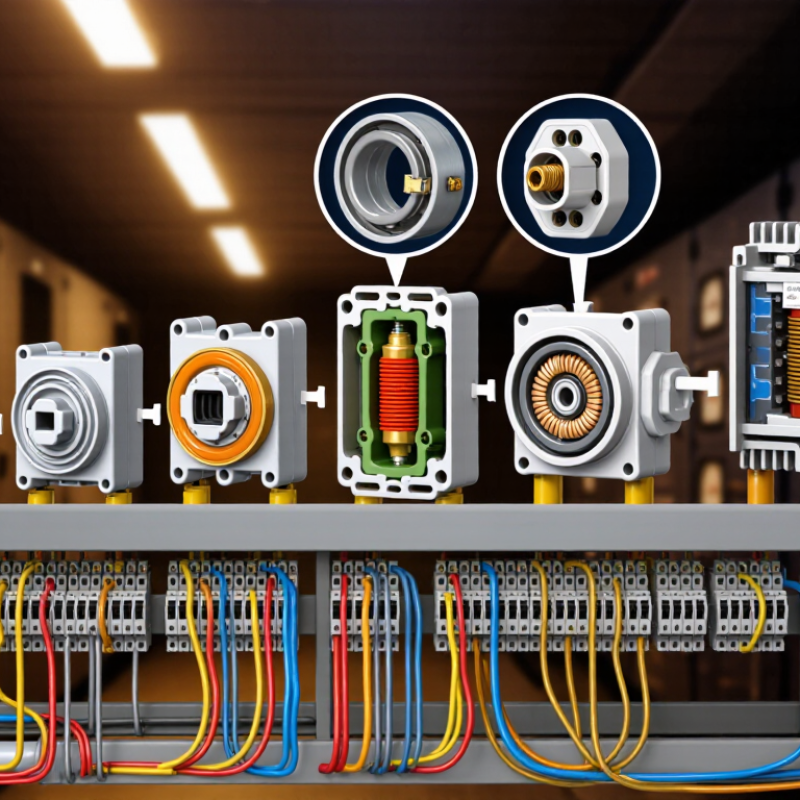
Global buyers usually compare seven CT current transformer designs: metering, protection, split-core, wound-primary, bar-type, ring-core, and low-power electronic CTs. Each serves a different field condition. Metering CTs support accurate billing, while protection CTs must remain stable during faults. Split-core models simplify retrofit work around crowded cables. Bar-type units suit switchboards with fixed busbars. IEC 61869-2 defines key performance requirements, including accuracy, insulation, and burden. IEEE C57.13 adds widely used American testing practices.
The IEA’s Electricity Grids and Secure Energy Transitions report says annual grid investment must rise from about 600 billion dollars today to over 1 trillion dollars by 2030. That expansion increases demand for dependable measurement equipment. Still, choosing by ratio alone is a mistake. Buyers should check class accuracy, knee-point voltage, short-time thermal current, frequency, insulation level, and installation temperature. A 400/5 A CT may look suitable, yet its burden can become excessive with long secondary wiring. Small errors matter.
Tips: Request factory test records and calibration evidence. Match IEC or IEEE requirements with local grid rules. Confirm terminal polarity before energizing. For outdoor sites, inspect sealing and creepage distance. For retrofit projects, measure cable diameter twice. I have seen rushed measurements delay installation. That weakness deserves attention. Some low-cost electronic CTs also need careful power and communication checks. Forecasts differ between market reports, so buyers should verify technical data before trusting growth figures.
7 Best CT Current Transformers for Global Buyers
Representative standard primary-current ratios commonly used across global power, industrial, and protection applications.
The values show typical continuous primary-current examples for seven widely used CT constructions. Actual selection should also consider secondary current, accuracy class, burden, insulation level, frequency, and installation method.
How to Choose a CT Transformer for Different Applications
Choosing among the seven best CT current transformers depends on the application, not popularity.
A metering CT needs high accuracy near normal load, while a protection CT must withstand fault currents without early saturation. Check the primary current, secondary output, accuracy class, burden rating, and system frequency.
For a compact distribution panel, a split-core CT may save installation time. For industrial switchgear, a solid-core model usually offers stronger mechanical stability.
Renewable energy systems may need bidirectional measurement and wide current ranges. Motor protection often requires dependable performance during starting and fault conditions. Confirm the conductor size and window opening before ordering.
A perfect electrical specification can still fail if the CT cannot fit around the cable. I learned this after treating physical clearance as a minor detail. It was not.
Tips:
Match the CT to the measuring device, especially its input current and burden. Use a dedicated protection core where fault detection matters. Never leave a current transformer secondary open while the primary carries current. Ask for test reports, insulation details, and calibration information from a qualified supplier. Check installation drawings twice. Small errors become expensive.
Installation, Safety, and International Compliance Considerations
7 Best CT Current Transformers for Global Buyers?
Installation, Safety, and International Compliance Considerations
Global electricity demand is forecast to grow by about 3.4% annually through 2026, according to the IEA Electricity 2024 report. That growth increases the need for dependable current transformers in factories, substations, and renewable-energy systems. The seven strongest choices usually include split-core, solid-core, revenue-grade, protection-class, window-type, bar-type, and flexible-core CTs. Selection should begin with current range, burden, accuracy, and installation space.
Safety begins before wiring.
Never open-circuit a powered CT secondary; dangerous voltage can develop. Short the secondary first, then isolate the circuit. Use insulated terminals, clear labels, and a visible grounding point. IEC 61869-2 addresses measuring transformer performance, accuracy classes, insulation, and testing. For equipment safety, IEC 61010-1 provides another useful reference. North American projects may also require alignment with IEEE C57.13 and local electrical codes.
International buyers should request factory test reports, calibration records, insulation-test results, and material declarations.
Verify the declared accuracy at the actual burden, not only at the headline rating. A compact split-core model may simplify retrofit work, but its hinge can weaken after repeated opening. That detail is easy to miss. A rushed choice fails. I have seen projects specify excellent accuracy while ignoring cable diameter, ambient heat, and secondary protection. These practical gaps can create larger risks than a small measurement error.