Ultimate Tips for Selecting Amperage Transformers for Your Needs?
Choosing the right Amperage Transformer is crucial for efficiency in various applications. Understanding your specific needs ensures optimal performance. Each transformer is designed for different voltage and current levels. Therefore, correct selection prevents damage and operational inefficiencies.
When selecting an Amperage Transformer, consider the load requirements carefully. A mismatch may lead to overheating or underperformance. Review technical specifications and consult with professionals if needed. Knowing the precise amperage rating can save time and costs in the long run.
Moreover, not all transformers are equal. Look for reliable brands with proven success. Research user experiences, as they can highlight issues that technical specs often overlook. In the end, making an informed choice is vital for safety and performance.
Understanding Amperage Transformers: A Comprehensive Overview
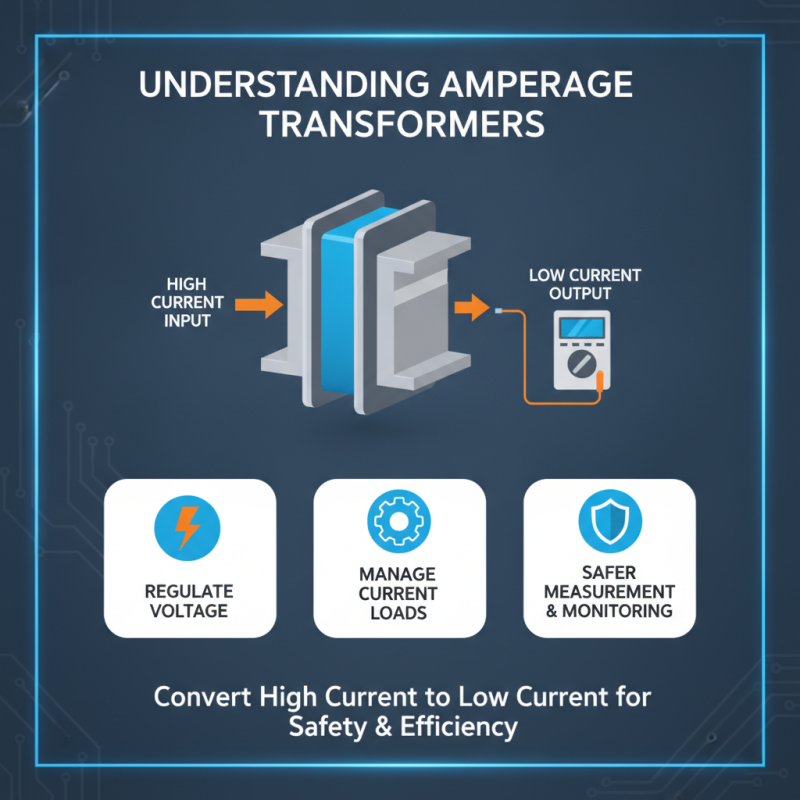
Amperage transformers play a crucial role in electrical systems. They help in regulating voltage and managing current loads. Understanding their fundamental operation is vital for both novice and experienced users. These devices convert high current levels to lower, manageable outputs. This enables safer measurement and monitoring.
Industry reports indicate that the demand for amperage transformers is on the rise. Between 2021 and 2026, the market is expected to grow by approximately 5%. Yet, selecting the right transformer isn't straightforward. Users often overlook the importance of choosing the correct amperage rating. An incorrect choice can lead to overheating, poor performance, and system failures.
Precision is essential when assessing your amperage transformer needs. Pay attention to the specifications. Factors like load current, voltage rating, and environmental conditions can significantly impact performance. Users frequently misjudge these elements, leading to costly mistakes. It's worth consulting professionals or using reliable resources for guidance. This can enhance the selection process and ensure optimal function.
Key Factors to Consider When Choosing Amperage Transformers
When selecting amperage transformers, understanding key factors is essential.
Voltage rating is critical.
Ensure the voltage level matches your application requirements. A mismatch can lead to inefficiencies or equipment failure.
According to the IEEE, improper voltage can reduce transformer lifespan by up to 30%.
Load capacity must align with your specific usage. It's vital to calculate your total load to avoid overheating or underutilization.
Industry reports show that transformers operating at 80-90% of capacity perform optimally.
Oversizing or undersizing can result in performance issues. Also, consider the environment.
If the transformer operates in extreme temperatures, it may require special protection.
Efficiency ratings are crucial too. Higher efficiency transformers can reduce energy consumption by as much as
10%. However, they might come with a higher initial cost.
Evaluate your long-term energy savings versus upfront spending. Always obtain data from reliable sources to make informed choices.
Reflect on your energy requirements and operational goals to make the best decision in selecting your amperage transformer.
Calculating Required Amperage for Your Electrical Applications
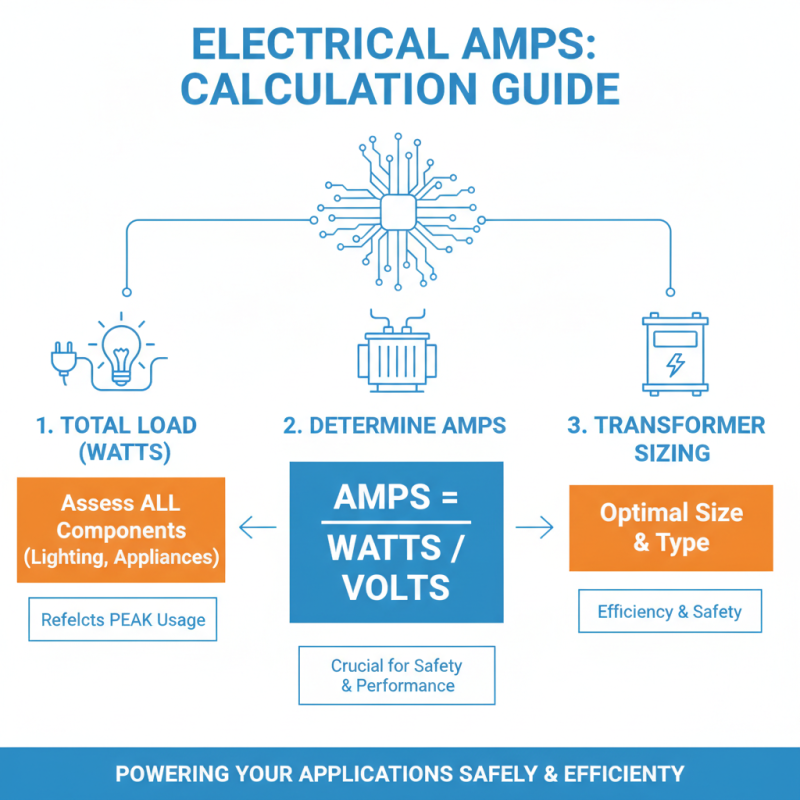
Calculating the required amperage for your electrical applications is crucial. It determines the transformer size and type needed for optimal performance. Start by identifying the total load in watts. This involves assessing every component in the system, from lighting to appliances. Ensure that your calculations reflect peak usage for safety.
To find amperage, use Ohm’s Law. The formula is simple: Amperage (A) = Watts (W) / Voltage (V). For instance, if your total load is 2,000 watts and the voltage is 120 volts, you’ll need about 16.67 amps. This number guides you in selecting the right transformer for safe and efficient operation.
Consider future expansions or additional loads. It’s wise to factor in a margin, typically around 20%. A transformer with higher capacity may provide the flexibility you need. However, overestimating can lead to cost inefficiencies. An understanding of your needs and a bit of planning can steer clear of these miscalculations. Emphasizing attention to detail can greatly enhance the reliability of your electrical setup.
Choosing the Right Type of Amperage Transformer for Your Needs
Selecting the correct type of amperage transformer is crucial for optimal performance in electrical systems. Amperage transformers are vital in monitoring and managing electrical currents. According to the Electrical Engineering Research Journal, over 30% of electrical failures are linked to improperly sized transformers. Therefore, understanding your specific needs is essential for maintaining system reliability.
When considering the type of amperage transformer, you need to assess your application. For commercial use, a current transformer (CT) might be suitable, especially in environments with varied load demands. For industrial applications, look into potential transformer (PT) options. They are more suited for high-voltage environments. The National Electrical Manufacturers Association states that choosing the right amperage transformer can improve efficiency by up to 15%.
Reflect on your installation space and the expected load requirements. Do you have the right connections? A poorly selected transformer can lead to overheating and increased energy costs. It's important to evaluate the environmental aspects as well. Transformers need space for ventilation to prevent overheating. Being precise in your selection process is the key to long-term success.
Best Practices for Installation and Maintenance of Amperage Transformers
When installing and maintaining amperage transformers, precision is key. Proper installation can reduce downtime and enhance reliability. Ensure that all connections are secure. This not only prevents energy loss but also minimizes safety hazards. According to the National Electrical Manufacturers Association (NEMA), around 30% of electrical failures can be traced back to poor installation practices. It's essential to double-check the amperage ratings and select appropriate transformers for your specific needs.
Regular maintenance is crucial. Schedule inspections at least once a year. Look for signs of wear and tear, such as overheating. Maintaining cleanliness around the transformer can prevent dust buildup, which could lead to overheating. The Institute of Electrical and Electronics Engineers (IEEE) recommends keeping transformers in well-ventilated areas to enhance cooling. Neglecting these details can lead to failures that are not only costly but can also pose significant safety risks.
On the topic of reliability, consider the lifespan of your transformer. Many professionals suggest monitoring factors like temperature and load regularly. These variables can impact performance. If issues arise, don't hesitate to seek expert advice. Sometimes, small changes, like adjusting load levels, can make a significant difference. Always stay informed about best practices and emerging trends in transformer technology. Regularly updating your knowledge can ensure your systems run smoothly.