Top 10 Hall Effect Transducers for Global Buyers Today?
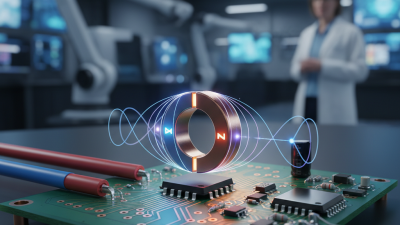
In today’s rapidly evolving technology landscape, the Hall Effect Transducer stands out as a crucial component in various applications. Its capacity to convert magnetic fields into electrical signals has made it indispensable in industrial and consumer electronics. With the global market expanding, selecting the right transducer can be overwhelming.
This article aims to highlight the top 10 Hall Effect Transducers, providing insights for buyers worldwide. Understanding the nuances of these devices is essential for making informed decisions. As technology progresses, features and specifications continuously change, sometimes making previous models obsolete.
Buyers should weigh factors like sensitivity, accuracy, and operational range. The right choice can enhance performance, but wrong selections often lead to inefficiencies. Exploring detailed reviews and user feedback could provide invaluable information. Just as the technology develops, the criteria for choosing Hall Effect Transducers should evolve.
Top Characteristics of Hall Effect Transducers in 2023 Market
In 2023, the Hall Effect transducer market is witnessing notable advancements. These devices are essential in many applications, including automotive, industrial, and consumer electronics. Reports indicate a surge in demand, with expected growth rates of around 8% annually over the next five years. Factors driving this growth include increased automation and the shift towards electric vehicles.
One key characteristic of modern Hall Effect transducers is their sensitivity. New designs feature enhanced sensitivity levels, enabling more precise measurements. Typical sensitivity can range from 50 to 100 mV/A, depending on the application. Additionally, improved temperature stability is crucial. Transducers that maintain performance across a wide temperature range, often from -40°C to 125°C, are favored in the market.
Another notable aspect is the miniaturization trend. As devices become smaller, transducers must also shrink without losing functionality. This presents challenges in manufacturing, requiring innovative approaches to maintain accuracy and reliability. According to industry experts, balancing size and performance remains an ongoing issue. Buyers are advised to consider these evolving characteristics to ensure they select the most suitable transducer for their needs.
Key Applications of Hall Effect Transducers in Various Industries
Hall effect transducers
play a critical role in various industries, leveraging magnetic fields to provide accurate measurements. In the automotive sector, these devices are often used for current sensing and position detection. They help in monitoring the electric current flowing through components, ensuring safety and efficiency. Their reliability under varying temperatures makes them suitable for engine control units and other electronic systems.
In industrial applications, hall effect transducers are vital for motor control and robotic systems. They enable precise feedback on rotor position, crucial for performance. These devices contribute to energy-efficient operations by optimizing control mechanisms. However, they sometimes struggle in environments with strong electromagnetic interference. This challenge highlights the need for robust shielding methods to maintain signal integrity.
In consumer electronics, hall effect transducers also find their application. They are used in smartphones and tablets for proximity sensing and magnetic field detection. This enhances user experience by enabling features like automatic screen dimming. Yet, manufacturers must consider the transducer's response time, as delays can impact device functionality. Overall, the diverse applications underscore the importance of continuous innovation in this field.
Global Market Trends and Growth Forecast for Hall Effect Transducers
The market for Hall effect transducers is witnessing dynamic growth. Key drivers include the increasing demand for automation and electrification in various industries. Hall effect sensors provide reliable measurements of magnetic fields, which are essential in many applications, such as electric vehicles and industrial automation. Their ability to function in challenging environments adds to their appeal.
Recent trends indicate a shift toward miniaturization in transducer technology. Smaller devices are not only lightweight but also cost-effective. This trend aligns with the global move towards more compact electronic designs. However, there is a need for more research on improving transducer accuracy and performance under extreme conditions. While many advances have been made, challenges remain in areas such as temperature stability and linearity.
Emerging markets are expected to significantly contribute to growth. Countries are investing in smart grid technologies, fueling demand for accurate sensing solutions. Yet, the market faces potential hurdles, including supply chain issues and fluctuating material costs. As companies strive for better efficiency, a careful assessment of these factors is crucial. Future innovation could lead to even more versatile and robust Hall effect transducers.
Top 10 Hall Effect Transducers for Global Buyers Today
| Rank |
Transducer Type |
Sensitivity (mV/V/Oe) |
Temperature Range (°C) |
Application |
Market Trend (%) |
| 1 |
Linear Hall Effect |
10 |
-40 to 125 |
Motor Control |
8.5 |
| 2 |
Digital Hall Effect |
30 |
-40 to 150 |
Position Sensing |
9.0 |
| 3 |
Bi-polar Hall Effect |
25 |
-30 to 100 |
Automotive Applications |
7.2 |
| 4 |
Omni-directional Hall Effect |
20 |
-40 to 125 |
Consumer Electronics |
8.8 |
| 5 |
Analog Hall Effect |
15 |
-20 to 85 |
Industrial Automation |
7.5 |
| 6 |
Hall Effect Switch |
35 |
-40 to 125 |
Security Systems |
9.2 |
| 7 |
Integrated Hall Effect |
40 |
-20 to 125 |
Robotics |
8.1 |
| 8 |
Latching Hall Effect |
50 |
-30 to 125 |
Energy Management |
9.5 |
| 9 |
High Speed Hall Effect |
45 |
-20 to 150 |
Telecommunications |
8.0 |
| 10 |
Current Sensor Hall Effect |
55 |
-40 to 125 |
Power Management |
9.1 |
Comparative Analysis of Top 10 Hall Effect Transducer Manufacturers
The Hall Effect transducer market is increasingly competitive. Various manufacturers offer distinct technologies and specifications. The demand for these devices is rising, especially in sectors like automotive and industrial automation. According to industry reports, the global Hall Effect sensor market is projected to reach over $2 billion by 2026.
Among the leading manufacturers, focus varies on features such as sensitivity, power consumption, and response time. Some transducers excel in low-power applications. They demonstrate ideal performance for battery-operated devices. Conversely, others prioritize precision in high-speed environments. The accuracy of these transducers is critical in real-time measurement applications.
Market data indicates that innovations in chip design have led to significant improvements in performance. However, a common challenge remains: calibrating these devices effectively across varying conditions. Many manufacturers continue to struggle with consistency. Despite advancements, ensuring reliability in diverse environments is crucial for success. As the technology evolves, these challenges require ongoing attention.
Top 10 Hall Effect Transducers - Comparative Analysis
Performance Metrics and Reliability Standards for Hall Effect Sensors
Hall Effect sensors have gained popularity because of their high performance and reliability. They measure magnetic fields with exceptional accuracy, making them essential in various industries. Performance metrics such as sensitivity, linearity, and temperature stability play a crucial role in selecting a Hall Effect transducer. According to a recent market research report, 75% of users prioritize these metrics when making purchasing decisions.
Reliability standards are equally vital. Products need to withstand harsh conditions. The International Electrotechnical Commission (IEC) sets standards ensuring sensors operate effectively in extreme temperatures and humidity. Compliance with these standards increases user trust. Studies indicate that reliability directly impacts maintenance costs, with failure rates significantly reducing when quality standards are met.
Tips: Consider the operating environment when choosing a sensor. Assessing parameters like vibration and electromagnetic interference can enhance system performance. Frequent calibration may also be necessary, despite the initial high accuracy of the sensors. Understanding these factors helps in making informed decisions that align with industry expectations.