How to Use Hall Magnetic Sensors for Enhanced Performance in 2025
As we venture into 2025, the integration of technology into various sectors continues to accelerate, bringing forth new opportunities for innovation and efficiency. Among the advancements shaping modern electronics and automation, Hall magnetic sensors stand out due to their unparalleled precision and adaptability. These sensors leverage the Hall effect, allowing them to detect magnetic fields with remarkable accuracy, which is crucial for a wide array of applications ranging from automotive systems to industrial automation.
The increasing reliance on Hall magnetic sensors is not merely a trend; it is a reflection of their ability to enhance performance in critical systems. Whether it’s improving the efficiency of electric motors, optimizing magnetic field detection in consumer electronics, or providing insights in IoT devices, Hall magnetic sensors are at the forefront of technological advancements. This article will delve into the practical applications and benefits of utilizing Hall magnetic sensors, illustrating how they can be harnessed to unlock enhanced performance and reliability in 2025 and beyond. By understanding the operational principles and emerging use cases of these sensors, industries can better position themselves to leverage the full potential of magnetic sensing technology.

Benefits of Hall Magnetic Sensors in Contemporary Applications
Hall magnetic sensors have become pivotal in many contemporary applications, providing a range of benefits that
enhance performance across various industries. Their ability to detect magnetic fields has made them invaluable
in fields such as automotive,
consumer electronics, and
industrial automation.
In automotive systems, for instance, Hall sensors are used for
position detection and speed monitoring in electric motors,
contributing to increased efficiency and reliability. This precision in operations helps reduce energy consumption
and improve the overall functionality of vehicles.
Moreover, in consumer electronics, Hall sensors facilitate
touchless operation, enabling devices to respond to gestures without direct contact.
This innovative interaction not only enhances user experience but also increases the longevity of devices by
minimizing wear and tear on physical buttons. In industrial automation, the sensors offer robust solutions for
monitoring equipment performance and can be integrated into various machinery to enhance safety and operational
efficiency. As the demand for smart and efficient technologies grows, the role of Hall magnetic sensors in
optimizing device performance continues to expand, showcasing their versatility and significance in contemporary
applications.
Overview of Hall Effect Principles and Sensor Mechanisms
The Hall effect is an important principle in magnetism and plays a crucial role in the functionality of Hall magnetic sensors. When an electric current flows through a conductor placed in a magnetic field, a voltage is generated perpendicular to both the current and the magnetic field. This phenomenon allows Hall sensors to accurately detect the presence and strength of magnetic fields, making them invaluable in various applications, from automotive sensors to industrial machinery.
Understanding the operating mechanism of Hall magnetic sensors can greatly enhance their performance. These sensors typically consist of a thin strip of conductive material positioned in a magnetic field. When the magnetic field is applied and a current flows through the strip, electrons are deflected, resulting in a measurable voltage across the sensor. This voltage correlates with the magnetic field strength, enabling precise measurements essential for applications requiring real-time data.
Tips: To maximize the efficiency of Hall magnetic sensors, ensure proper calibration during installation. Regularly check for environmental factors such as temperature fluctuations and magnetic interference, which could affect sensor accuracy. Additionally, consider using multiple sensors in tandem for applications that require redundancy or enhanced measurement precision.
Performance Metrics of Hall Magnetic Sensors in Automotive Industry
The automotive industry is rapidly embracing Hall magnetic sensors due to their precision and reliability in various applications. These sensors play a critical role in performance metrics such as speed, position, and current measurement, enabling enhancements in vehicle efficiency and safety. According to a recent market report, the global Hall effect sensors market is expected to reach USD 3.8 billion by 2025, growing at a CAGR of 7.5% from 2020, driven primarily by the increasing demand for advanced driver-assistance systems (ADAS) and electric vehicles (EVs).
In particular, the automotive sector benefits from the use of Hall magnetic sensors in applications like brushless motors, steering systems, and anti-lock braking systems (ABS). For instance, a study indicated that utilizing Hall sensors in electric power steering (EPS) systems can improve energy efficiency by up to 20%, which is crucial as manufacturers strive to meet stringent emission regulations. Furthermore, the accuracy and durability of Hall sensors contribute to enhanced performance metrics, allowing for more precise data collection and control mechanisms that directly improve vehicle dynamics and overall driver experience. The integration of these sensors into automotive designs not only boosts functionality but also positions manufacturers to better address the evolving demands of the market.
Integrating Hall Sensors in IoT Devices for Enhanced Functionality
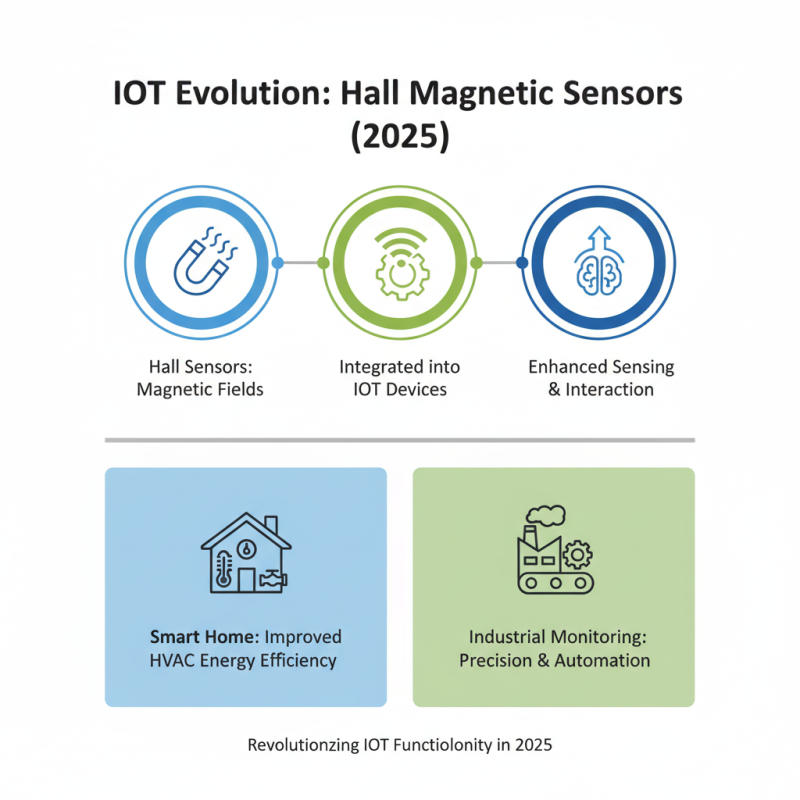
The integration of Hall magnetic sensors into Internet of Things (IoT) devices is set to revolutionize their functionality in 2025. Hall sensors are renowned for their ability to detect magnetic fields and convert the information into electrical signals. This capability enables a wide range of applications, from smart home automation to industrial monitoring systems. By incorporating these sensors, IoT devices can achieve enhanced sensing capabilities, enabling better interaction with their environment. For instance, smart thermostats can leverage Hall sensors to assess the position of valves in HVAC systems, resulting in improved energy efficiency.
In addition to improved functionality, Hall sensors facilitate more precise data gathering for IoT devices. With their high sensitivity and reliability, these sensors can provide accurate readings in various conditions, making them ideal for applications such as wearable health monitors and smart agriculture tools. The integration process involves connecting Hall sensors to microcontrollers within IoT systems, whereby the sensors can relay crucial information about magnetic field changes. This connection allows devices to operate more intelligently, adapting to user needs and environmental changes in real-time. As we advance into 2025, the role of Hall magnetic sensors will undoubtedly be pivotal in enhancing the performance and capability of IoT devices across multiple sectors.
Future Trends and Innovations in Hall Sensor Technology for 2025
As we look towards 2025, the field of Hall sensor technology is poised for significant innovations that will enhance performance across various applications. One prominent trend is the miniaturization of Hall magnetic sensors, allowing them to be integrated into smaller devices without sacrificing accuracy or reliability. This shift will enable more compact designs in consumer electronics, automotive applications, and industrial automation, paving the way for smarter and more efficient systems.
Another crucial innovation on the horizon is the development of advanced sensing materials that improve the sensitivity and response time of Hall sensors. Researchers are exploring novel semiconductor materials and configurations that enhance the performance of these sensors, making them more effective in detecting subtle magnetic fields. This advancement will likely lead to more precise measurements and better performance in critical applications such as robotics, medical devices, and environmental monitoring, where accuracy is paramount. The ongoing integration of Hall sensors with IoT technologies is also expected to revolutionize data acquisition and processing, further driving the demand for these sensors in various sectors.