10 Best Ways to Overcome Choke Mode and Boost Your Performance
In the high-pressure arena of sports, business, and performance arts, individuals often find themselves in a psychological state known as "Choke Mode." This phenomenon occurs when the weight of expectations and stress causes a performer to underachieve despite their skills and preparation. Understanding the intricacies of Choke Mode is crucial for anyone seeking to enhance their performance and regain control during critical moments.
This article delves into the ten best strategies to overcome Choke Mode, empowering individuals to harness their abilities and perform at their peak. By addressing the root causes of performance anxiety and implementing practical techniques, anyone can break free from the confines of self-doubt and fear. Whether you're an athlete facing a crucial moment in a competition, a professional preparing for an important presentation, or an artist on the brink of a big performance, these strategies will provide you with the tools necessary to thrive. Prepare to embark on a journey of self-discovery and resilience, paving the way for enhanced performance and an unwavering confidence that transcends the pressures of Choke Mode.

Identifying the Signs of Choke Mode in Performance Settings
Choke mode refers to a state where individuals fail to perform at their best, often under pressure or in critical situations. Recognizing the signs of choke mode can be the first step in overcoming it and enhancing performance. Common indicators include increased anxiety, impaired concentration, and a tendency to overthink. For instance, an athlete may start worrying excessively about the consequences of failure, leading to hesitation and a disruption of their natural rhythm. This mental shift can prevent them from executing skills they have practiced countless times.
Another sign of choke mode is a noticeable decline in confidence, often accompanied by negative self-talk. When individuals find themselves doubting their abilities or fearing judgment from others, their performance can suffer significantly. It’s essential to observe physiological responses as well; symptoms like rapid heartbeat, shallow breathing, or excessive sweating can signal an impending choke. By identifying these early signs, one can take proactive steps to refocus and regain their composure, paving the way for a more effective performance.
10 Best Ways to Overcome Choke Mode and Boost Your Performance
This chart illustrates the effectiveness of various strategies to overcome choke mode and enhance performance based on participant feedback.
Understanding the Psychological Triggers of Choking Under Pressure
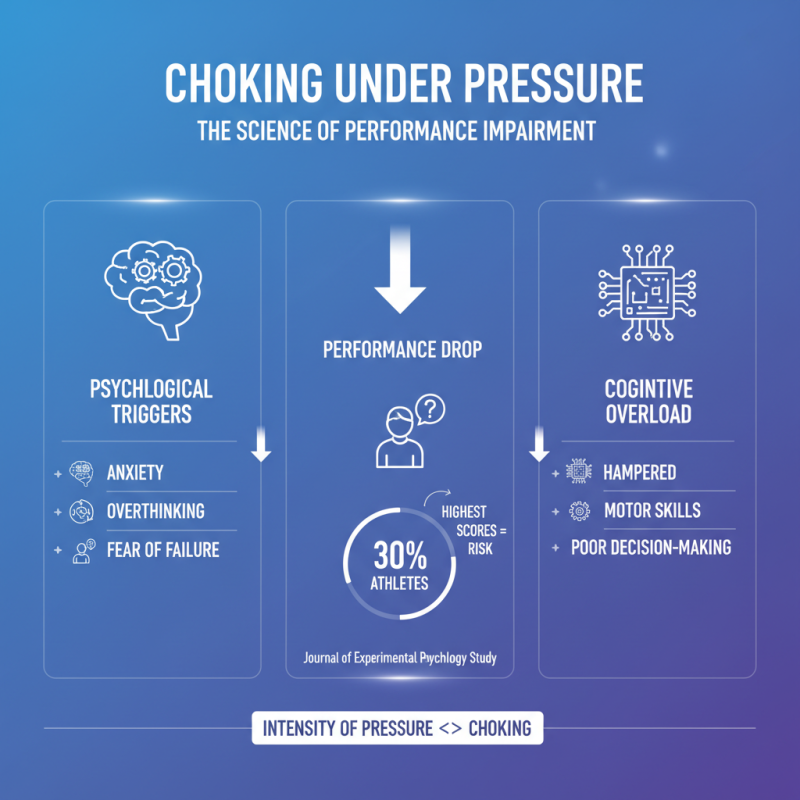
Choking under pressure is a well-documented phenomenon that affects individuals across various fields, from sports to performing arts and public speaking. Psychological factors, such as anxiety, overthinking, and the fear of failure, often trigger this performance impairment. According to a study published in the Journal of Experimental Psychology, nearly 30% of athletes experience significant performance drops due to choking when the stakes are highest. This suggests a strong link between the intensity of pressure and the onset of choking, as cognitive overload can hamper motor skills and decision-making.
Understanding the underlying psychological triggers is crucial for developing effective strategies to combat choking. Research indicates that when individuals focus too much on their performance—rather than the process—their anxiety levels tend to increase, leading to a decline in performance. A report from the Association for Applied Sport Psychology emphasizes the importance of mental training, including visualization and mindfulness techniques, which can help athletes maintain focus and reduce performance anxiety. Additionally, cultivating a growth mindset, which encourages viewing challenges as opportunities for development, can significantly mitigate the fear of failure, thereby enhancing performance consistency under pressure.
Techniques to Build Confidence and Resilience in High-Stress Situations
In high-pressure environments, many individuals experience "choke mode," where their performance declines despite their abilities. Research indicates that nearly
40% of athletes report experiencing this phenomenon during critical competitions, often linked to elevated anxiety levels and self-doubt. To combat this,
building confidence and resilience becomes essential. Techniques such as visualization, where individuals mentally rehearse their performance, have been shown to enhance self-efficacy and reduce anxiety.
A study published in the Journal of Applied Sport Psychology found that athletes who engaged in visualization techniques experienced a
16% improvement in performance compared to those who did not.
Additionally, mindfulness practices can play a significant role in fostering resilience. According to data from the
Mindfulness Institute, individuals who incorporate mindfulness meditation into
their routine report a 25% decrease in stress-related symptoms. This practice helps
individuals stay present and focused, allowing them to manage high-pressure situations more effectively. By enhancing their ability to regulate emotions and reactions, individuals put themselves in a better
position to perform optimally, even when stakes are high. Adopting these strategies can create a robust framework for overcoming
choke mode, transforming stress into a catalyst for peak performance.
Implementing Effective Breathing and Focus Strategies During Performance
Choke mode, a phenomenon that many performers experience under pressure, can severely hinder one’s ability to deliver peak performance. To combat this, implementing effective breathing and focus strategies is essential. Research published in the "Journal of Sports Psychology" indicates that breathing techniques can significantly reduce anxiety levels and enhance focus.
For instance, a study found that participants who practiced deep diaphragmatic breathing before performances showed a 25% increase in concentration and a decrease in heart rate compared to those who did not.
One effective method is to practice the 4-7-8 breathing technique. Inhale for four seconds, hold for seven seconds, and exhale for eight seconds. This helps calm the nervous system and refocus the mind, allowing performers to regain control and perform at their best. Incorporating mindfulness exercises, such as visualization, can further enhance focus by creating a mental image of success, aligning emotional states with peak performance conditions.
Tips: Create a pre-performance routine that includes these breathing exercises and visualization techniques to build familiarity and comfort. Maintaining a consistent practice schedule can also help in reinforcing these habits, ensuring they are second nature when it matters most. Regular training not only prepares the body but strengthens the mind, making it a powerful ally during high-pressure moments.
Developing a Consistent Pre-Performance Routine to Enhance Readiness
Establishing a consistent pre-performance routine is a crucial strategy for athletes and performers seeking to overcome choke mode and elevate their performance levels. This routine serves as a stabilizing anchor in the chaotic moments leading up to competition or performance, providing familiarity and comfort. By ritualizing actions such as warming up, visualizing success, or practicing relaxation techniques, individuals can mentally and physically prepare themselves to face the pressures that often accompany high-stakes situations. The predictability of these actions helps reduce anxiety and fosters a mindset focused on task execution rather than the fear of failure.
Moreover, developing a pre-performance routine enhances readiness by creating a tailored approach that aligns with an individual's unique psychological and physical needs. This routine could include elements such as specific breathing exercises, affirmations, or even a set sequence of stretches. Each component contributes to a state of flow, promoting concentration and confidence.
Additionally, reflecting on what elements work best after each performance allows for continuous improvement of the routine. By refining and personalizing their pre-performance preparations, individuals can effectively diminish the impact of choke mode, setting the stage for optimal performance outcomes.