
inquiry
Leave Your Message

10 EV Control Tips for Global Buyers

Buying an electric vehicle across borders demands more than comparing range and price. Global buyers must examine charging standards, battery health, software access, warranty coverage, and local service support. This guide introduces 10 practical Ev Control tips for making a safer, better-informed decision.

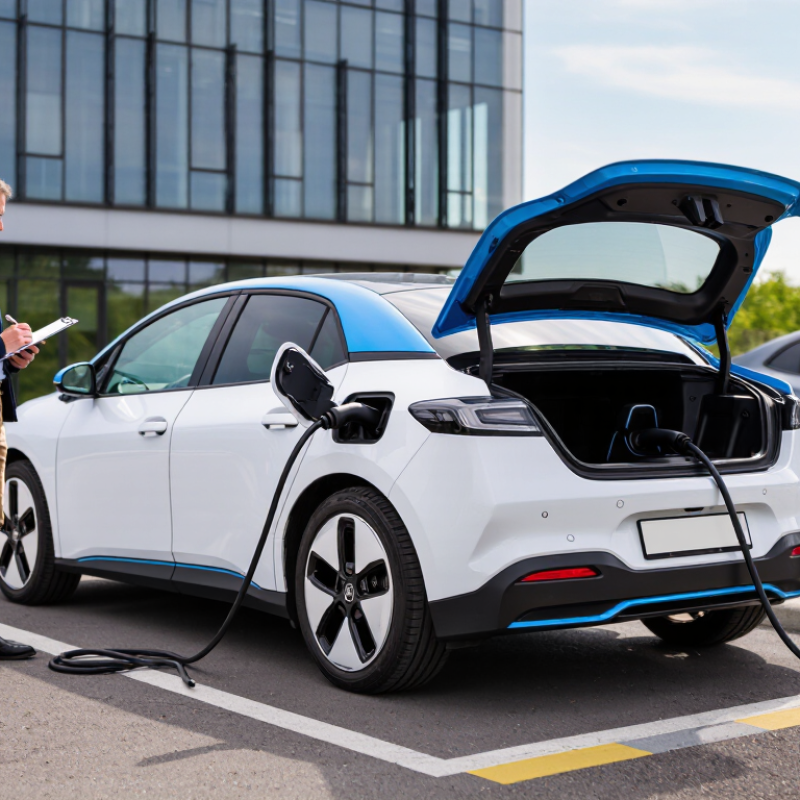
Real-world experience matters. A vehicle rated for 500 kilometers may deliver less in cold weather, heavy traffic, or sustained highway driving. A simple charging test can reveal connector damage, slow charging, or unusual battery behavior. Buyers should request documented inspection results, verified mileage, and clear ownership records. They should also confirm whether navigation, mobile applications, and over-the-air updates work in the destination market.

Small details often become expensive problems. Check the charging port beside the seller’s cable. Review the warranty in writing. Ask who handles battery repairs after delivery. Confirm that replacement parts and qualified technicians are available locally. Import duties, registration rules, safety certification, and regional data requirements may also affect the final cost. Guidance from authorized dealers, certified inspectors, and official transport agencies remains more reliable than informal online claims.

No checklist removes every uncertainty. Some sellers may provide incomplete information, while buyers may overlook familiar risks when a price seems attractive. That mistake is easy to make. Careful documentation, independent verification, and realistic ownership planning can reduce surprises. These 10 tips are designed to support sound judgment, not replace professional inspection or official advice.
10 EV Control Tips for Global Buyers

Define EV Control Systems and Regional Driving Requirements

An EV control system coordinates the motor, battery, brakes, steering interfaces, thermal circuits, and charging hardware. It interprets pedal position, wheel speed, battery temperature, and road conditions in milliseconds. That information shapes torque, regenerative braking, traction control, and power limits. Drivers feel this as smooth launch, predictable stopping, or reduced output. Small settings matter.

Global buyers should assess where the vehicle will operate, not only its advertised range. Heavy rain, snow, dust, steep hills, and high heat can change control behavior. Road-side conventions also matter. A vehicle must support left- or right-hand traffic, local speed displays, lighting rules, and reliable lane markings. Urban stop-and-go driving may reward adjustable regeneration, while rural roads demand stable traction and clear pedal response. Cold regions need battery preconditioning. Hot regions need careful thermal protection during fast charging. Charging interfaces, grid voltage, and local certification requirements require verification.

Before purchase, request documented testing across the intended climate and road type. Check whether software updates preserve familiar control behavior after servicing. Independent test data is useful, but it cannot replace a local drive. One overlooked issue is driver adaptation. Strong regeneration may feel efficient to one driver and abrupt to another. Test with passengers, gradients, wet pavement, and a nearly full battery. Specifications can look precise. They still leave room for judgment when regional conditions differ from laboratory testing.


Assess Charging Access, Connector Standards, and Power Compatibility

10 EV Control Tips for Global Buyers

Assess Charging Access, Connector Standards, and Power Compatibility

Buying an electric vehicle across borders begins with electricity, not dashboard features. Check public chargers within your normal routes, including overnight stops and rural gaps. A beautiful charging map is not enough. Confirm operating hours, payment methods, local access rules, and whether stations support your vehicle’s charging type. Ask a local installer to inspect the parking space before delivery. Cable length and weather exposure matter more than many sales pages suggest.

Connector standards can vary by country, vehicle version, and charging speed. Request the exact inlet specification in writing, not a general regional description. Check whether public stations use compatible alternating-current and direct-current connectors. An adapter may solve one connection, but it may not support fast charging, communication, or safe locking. Do not assume a travel adapter changes voltage or frequency. It does not. Keep the original cable and verify its rating against local sockets.

Power compatibility deserves a separate test. Compare the vehicle’s onboard charger with your home supply, phase arrangement, voltage, and circuit capacity. A household outlet may charge slowly or overheat if wiring is old. Use a qualified electrician and follow local electrical requirements. I once treated “compatible” as a complete answer; it was not. The missing detail was peak load during evening use. Leave room for cold weather, shared circuits, and occasional charging failures.

10 EV Control Tips for Global Buyers - Assess Charging Access, Connector Standards, and Power Compatibility

No. Control Tip What to Assess Verified Technical Fact Buyer Action Risk Level
1 Map charging access Home, workplace, public, and motorway charging availability. A vehicle's practical range depends on access to charging, not only on battery capacity. Confirm the distance to regular charging points and whether they are available at the required times. High
2 Match the AC connector The vehicle inlet and the local AC charging connector. Type 1 is common in North America and Japan, while Type 2 is widely used in Europe and many other markets. Request a clear photograph or specification of the inlet and charging cable before purchase. High
3 Check the DC fast-charge standard Compatibility with the intended fast-charging network. CCS1 combines Type 1 AC contacts with DC contacts; CCS2 combines Type 2 AC contacts with DC contacts. CHAdeMO and GB/T use different connector systems. Do not assume that an AC adapter will enable DC fast charging; confirm the complete DC inlet specification. High
4 Verify grid voltage The local supply voltage and the charger's permitted input range. Many regions use approximately 230 V, while North American residential supplies commonly provide 120/240 V; Japan commonly uses 100 V. Compare the charger's input rating with the actual household or site supply; never rely on a plug-shape adapter alone. Critical
5 Confirm frequency compatibility Whether the equipment supports the local electrical frequency. Power systems commonly operate at 50 Hz or 60 Hz; Japan uses both frequencies in different areas. Check the nameplate for an accepted range such as 50/60 Hz before importing or relocating equipment. Critical
6 Calculate available AC power Circuit voltage, current, phase arrangement, and installation limits. Single-phase AC charging is often about 3.7–7.4 kW, while three-phase systems can support higher outputs such as 11 or 22 kW when the vehicle and installation allow it. Use the lower of the vehicle's onboard charger rating, the charging equipment rating, and the site's circuit capacity. High
7 Separate charger output from vehicle input The maximum output of the charging station versus the vehicle's acceptance rate. A high-power station does not guarantee high charging speed if the vehicle's onboard AC charger or DC charging system accepts less power. Record both values separately and use the lower value when estimating charging time. High
8 Review plug, socket, and protection rules Socket type, earthing, residual-current protection, and installation regulations. EV charging installations may require dedicated circuits and residual-current protection suitable for DC leakage, depending on local electrical codes. Have a qualified local electrician verify the circuit, protective devices, earthing, and installation permit requirements. Critical
9 Check communication compatibility Charging communication protocol, authentication, and payment access. AC and DC charging can use different communication methods; network access may also require local registration, payment, or roaming support. Confirm that the vehicle, charger, and intended public network can communicate and authenticate successfully. Medium
10 Validate temperature and operating conditions Battery temperature, ambient climate, altitude, and charging derating. Very cold or hot conditions can reduce charging speed and usable range; battery thermal management may limit power until the battery reaches a suitable temperature. Ask for operating-temperature limits and include seasonal charging-time margins in the ownership plan. Medium
Planning note: Charging performance is limited by the lowest-rated component in the chain: grid supply, circuit, charging equipment, connector, vehicle charger, or battery conditions.

Compare Battery Management, Range, and Climate Performance

For global EV buyers, battery management deserves more attention than headline capacity. A larger pack does not always deliver better daily range. Check usable capacity, charging speed, thermal protection, and the accuracy of the range estimate. Strong systems balance cells during charging and limit extreme temperatures. These controls can reduce degradation over time. Ask for battery-health records when buying a used vehicle. Small differences matter.

Range figures depend on testing standards, traffic, terrain, tires, and cabin temperature. Compare results from the same testing cycle whenever possible. Then examine real-world reports from similar climates. A vehicle showing 450 kilometers in mild weather may lose significant range at -10°C. Mountain roads and heavy cargo create another gap. Real roads disagree. Test the details.

Climate performance affects comfort and energy use. Heat pumps can reduce winter consumption, while efficient cooling helps in hot regions. Check how quickly the cabin warms after an overnight stop. Observe whether fast charging slows sharply when the battery is cold. Preconditioning while connected to a charger is useful, but it requires planning. In humid areas, inspect window defogging and seat ventilation performance. Cold weather exposes weaknesses. No single review can represent every country, driving style, or season, so compare independent tests with local owner experience. A careful buyer should also question unusually perfect efficiency claims.

Verify Safety Controls, Software Features, and Regulatory Compliance

10 EV Control Tips for Global Buyers

Verify Safety Controls, Software Features, and Regulatory Compliance

Verify Safety Controls, Software Features, and Regulatory Compliance

A careful inspection starts with safety controls, not screen size. Check seatbelt warnings, airbag indicators, child locks, tire pressure alerts, and emergency braking settings. Confirm that the emergency power disconnect is clearly marked and accessible. Ask for independent crash-test records and current recall information. Do not rely on sales descriptions alone.

Software controls require equal attention. Test the charging timer, battery limit, regenerative braking, and navigation settings. Check whether driver-assistance features can be adjusted without disabling essential safety functions. Read the privacy menu, especially location sharing, camera access, and remote control permissions. Confirm update methods and support periods. A beautiful interface can still hide confusing controls. I once missed a regional language setting during a vehicle handover. That small oversight made an important warning harder to understand.

Regulatory compliance varies by destination. Request conformity documents, battery transport records, charging specifications, and proof of local approval. Verify that the charging connector, emergency call function, lighting controls, and software features match local requirements. Ask whether imported software will receive regional updates. Test the vehicle on familiar roads, including rain, hills, and poor markings. Keep every document and inspection result. A checklist helps, but it is not perfect. Independent technical advice may reveal gaps that a short showroom test cannot.

Plan Ownership Costs, Maintenance Support, and Cross-Border Service

10 EV Control Tips for Global Buyers

Plan Ownership Costs, Maintenance Support, and Cross-Border Service

Estimate the full ownership cost before choosing an electric vehicle. Include purchase taxes, registration, insurance, charging, and battery-related fees. Check electricity prices at home and on frequent travel routes. Keep a repair reserve for tires, suspension parts, cooling systems, and software diagnostics. Ask the seller for a written warranty, including battery capacity terms and transfer conditions. Confirm whether scheduled maintenance is available in your destination country. Keep receipts.

Service access can matter more than a lower purchase price. Contact two authorized repair centers before payment, and ask about technician training, parts availability, and average waiting times. Request a maintenance schedule based on your driving conditions. Some vehicles need fewer engine services, but they still require brake, tire, fluid, and safety inspections. I once underestimated storage fees during a cross-border repair. That mistake changed my budget.

Check charging connector compatibility, voltage requirements, and payment access across every travel region. Confirm that navigation, remote functions, and emergency support work outside the selling country. Ask whether software updates require local registration or an approved service network. Review import documents, safety certifications, and local road requirements with qualified professionals. Do not rely on verbal promises. Ask twice. Save every document in digital and printed form. A small checklist can prevent expensive delays, although mine still missed one charging adapter.

10 EV Control Tips for Global Buyers

Plan ownership costs, maintenance support, and cross-border service as EV adoption grows worldwide.

Chart: Global electric-car sales share increased from approximately 4% in 2020 to more than 20% in 2024. This growth makes it increasingly important to verify charging compatibility, battery-warranty coverage, local service access, software support, spare-parts availability, insurance costs, taxes, resale value, and cross-border repair arrangements before purchasing.

Source: International Energy Agency, Global EV Outlook 2025. Values are rounded global estimates.