How to Choose a Heavy Transformer for Global Projects?
Choosing a Heavy Transformer for a global project is not simply a matter of selecting the highest MVA rating. It requires practical judgment, verified data, and a clear understanding of the installation environment. A unit designed for a coastal substation may fail commercially in a remote desert project if cooling, corrosion protection, and spare-parts access are ignored.
Transformer specialist Martin Heathcote wrote, “The transformer is one of the most important links in the electrical energy supply chain.” That statement remains highly relevant. A Heavy Transformer must match system voltage, frequency, impedance, insulation level, transport limits, and expected load patterns. Engineers should also examine factory test records, oil quality controls, noise limits, and the manufacturer’s experience with international logistics. A technically excellent transformer can still create serious delays if it cannot pass through a narrow bridge, port, or mountain route.
Look beyond the nameplate.
Global projects often involve different grid codes, climates, and inspection practices. Ambient temperatures can affect cooling performance. Altitude can reduce insulation margins. Humidity may accelerate corrosion inside control cabinets. These details need documented calculations, not optimistic assumptions.
The selection process should include lifecycle cost, not only purchase price. Monitoring systems, on-site assembly, maintenance training, and emergency support may determine long-term reliability. Even experienced teams can miss an important interface. That is why independent design reviews and witnessed testing are valuable.
There is no perfect specification. Trade-offs remain. A larger transformer may offer future capacity, yet increase transport risk and foundation costs. This guide explains how to balance performance, compliance, logistics, and resilience when choosing a Heavy Transformer for global projects.
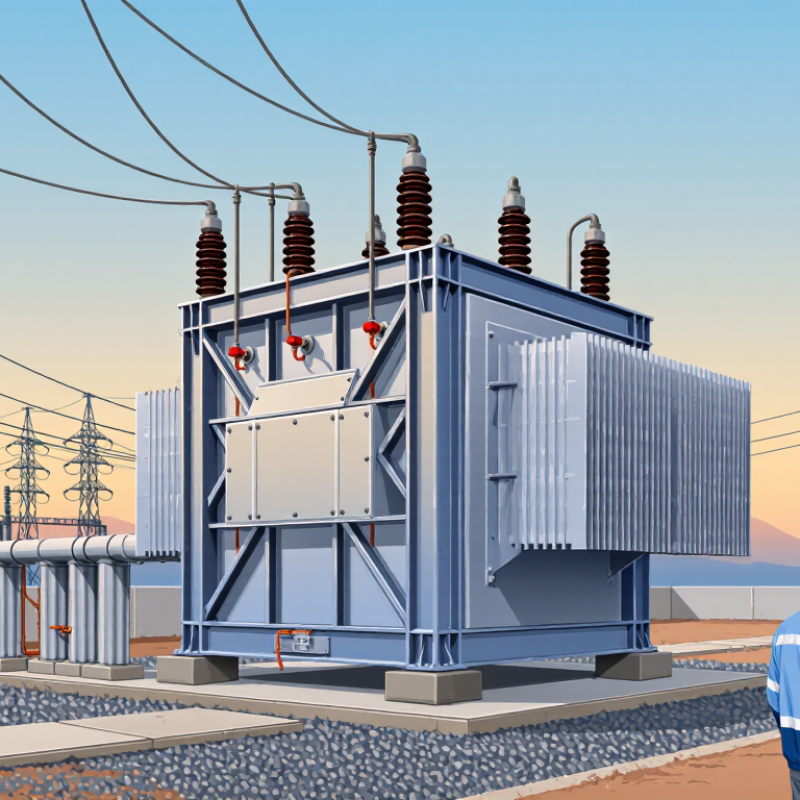
Define Heavy Transformer Ratings: 10–1,000 MVA and 50/60 Hz Grid Needs
Choosing a heavy transformer starts with the grid, not the catalog.
Ratings from 10 to 1,000 MVA cover very different project realities. A 10 MVA unit may serve an industrial facility, while a 1,000 MVA transformer can support a major transmission corridor. Confirm the required voltage ratio, fault level, impedance, and continuous load before comparing designs. A transformer rated for 50 Hz may not perform correctly on a 60 Hz network without engineering review. Frequency affects core flux, losses, temperature, and noise.
Field experience shows that cooling capacity deserves close attention. Oil-immersed units may use natural or forced circulation, depending on heat and space limits. Check ambient temperature, altitude, humidity, transport routes, and installation clearances. A mountain substation needs different cooling assumptions than a coastal plant. Tap changers also matter when renewable generation causes voltage variation. Protection studies should match the transformer’s insulation level and short-circuit withstand capability. Small errors here become expensive.
Tips:
Request routine and type-test evidence from qualified laboratories. Compare guaranteed losses, not only purchase price. Confirm whether the supplier calculated performance at 50 Hz, 60 Hz, or both. Review factory acceptance procedures with an independent engineer. A rating alone can mislead. I would also challenge optimistic loading assumptions; real sites rarely behave like spreadsheets. Leave practical margin for aging, seasonal peaks, and future expansion.
Match Voltage, Insulation, and BIL: Requirements Up to 1,100 kV AC
How to Choose a Heavy Transformer for Global Projects?
Selecting a heavy transformer starts with the system voltage, not the equipment nameplate. Confirm the highest system voltage, operating frequency, tap range, and grounding method. A transformer for a 1,100 kV AC network needs carefully coordinated insulation across windings, bushings, and internal connections. Small mismatches can create expensive site problems.
Insulation must suit local altitude, humidity, pollution, and switching conditions. Lightning impulse withstand, power-frequency withstand, and switching impulse levels should follow the project specification and applicable IEC or regional standards. At extra-high voltage, switching surges may be more influential than lightning impulses. Do not rely on a standard table alone. A perfect spreadsheet can still miss a harsh installation environment. I have seen designs revised after pollution data arrived late.
Tips:
Request the insulation coordination study before approving the transformer design. Check BIL values for every terminal, not only the high-voltage side. Verify clearances, creepage distances, surge arresters, and bushing ratings together. Ask for routine and type-test evidence, including impulse test records and temperature-rise results. Review transport limits too; a technically suitable unit may fail practical delivery constraints. The first selection is rarely final. Leave documented margins, but avoid excessive ratings that increase cost, size, and losses without improving reliability.
Verify Transport Limits: 100–500 t Units, Axle Loads, and Route Surveys
Choosing a heavy transformer for an international project starts with transport, not voltage. Units from 100 to 500 tonnes can change the entire delivery plan. A 120-tonne transformer may travel safely on one trailer, while a 400-tonne unit may require modular axle lines, escorts, and temporary road support. The transformer’s shipping weight is only part of the calculation. Include the trailer, lifting frames, oil, tools, and temporary accessories.
Axle load limits must be checked at every stage. A route may accept the total weight but reject concentrated loads on an old bridge. Engineers should review bridge ratings, pavement strength, turning radii, gradients, overhead cables, railway crossings, and narrow urban sections. Measure real clearances. Do not trust outdated satellite images. A route survey should record road width, shoulder condition, culvert locations, and safe stopping areas. Small details matter.
During one planning review, a route looked suitable on paper but failed near a sharp bend. The transformer could pass only after removing roadside barriers and adjusting the trailer configuration. That mistake was avoidable. Route data should come from qualified local survey teams and be checked against current transport permits and infrastructure records. Weather can also affect access, especially on weak shoulders or temporary roads. Allow time for a second survey. Plans can be wrong. Recheck the numbers before manufacturing begins.
Confirm Global Compliance with IEC 60076, IEEE C57, and Local Codes
How to Choose a Heavy Transformer for Global Projects?
Global transformer selection begins with compliance, not shipping weight. IEC 60076 defines core performance and testing requirements for power transformers. IEEE C57 standards provide additional guidance for ratings, insulation, temperature rise, and test procedures. Local codes still control installation details. Confirm them early.
The IEA’s Electricity Grids and Secure Energy Transitions report estimates annual grid investment must exceed 600 billion dollars by 2030, nearly double current levels. This expansion increases demand for dependable heavy transformers. Yet, compliance can fail through small omissions. Check the nameplate voltage, frequency, vector group, impedance, altitude, ambient temperature, and insulation level. Verify short-circuit withstand tests and routine test records. For outdoor units, review bushing clearances, oil containment, fire separation, and noise limits.
Field experience shows that certificates alone are not enough. A report may match IEC 60076 but miss a local seismic or environmental requirement. That is the weak point. Require a clause-by-clause compliance matrix, witnessed testing, and traceable calibration records. IEEE C57 guidance should be matched with the project utility’s approved practices. The U.S. Department of Energy’s transformer supply-chain review also highlights constrained materials and long procurement periods. Allow time for design clarification, retesting, and customs documentation. A perfect checklist is unlikely. Independent review remains valuable.
How to Choose a Heavy Transformer for Global Projects?
Common high-voltage system classes to verify when defining transformer ratings. IEC 60076 establishes transformer requirements, IEEE C57 provides widely used North American practices, and local codes determine grid-specific acceptance criteria.
Reference values represent nominal system voltage levels commonly specified in international power systems, aligned with IEC 60038 voltage classes. Final transformer selection must confirm insulation coordination, frequency, grounding, tap range, short-circuit withstand, efficiency, testing, and applicable local grid codes.