Top 10 Best Distribution Transformer Cores for Optimal Performance?
When it comes to electrical power distribution, the Distribution Transformer Core plays a critical role. These cores are essential for managing voltage and current in transformer systems. Their design and materials greatly influence performance, efficiency, and durability.
Choosing the right distribution transformer core can be daunting. There are many factors to consider, like magnetic properties and cooling characteristics. Each option comes with its own pros and cons. Sometimes, an ideal choice may not exist. Mistakes can lead to costly energy losses and compromised system reliability.
Optimal performance in distribution transformers relies on understanding these cores. We will explore the top ten best options available. This journey will sharpen our perspective. Let's reflect on what makes a truly effective distribution transformer core.
Overview of Distribution Transformer Cores and Their Importance
Distribution transformer cores play a crucial role in the efficiency of electrical power distribution systems. They help to convert
high voltage electricity into lower voltages suitable for residential and commercial use.
According to recent industry reports, improved core materials can enhance efficiency by up to 5% and
reduce energy losses significantly. This reduction in losses translates to better operational performance.
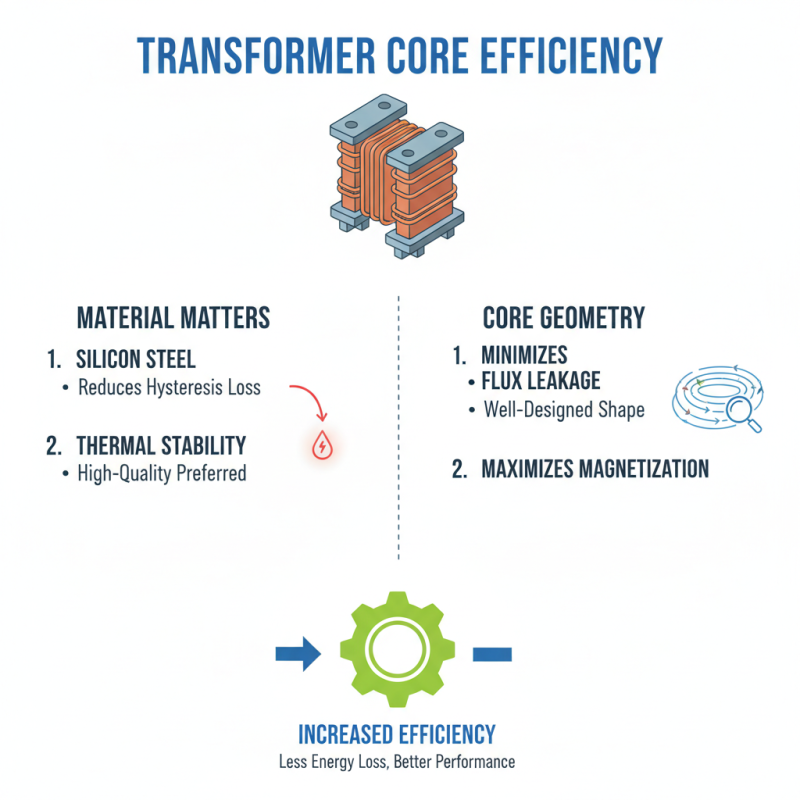
The material used in transformer cores significantly impacts their performance. Silicon steel is
commonly used due to its low losses and high magnetic permeability. However, amorphous steel is
gaining attention for its superior properties, allowing for lower core losses. Studies indicate that utilizing amorphous steel
cores can lead to a reduction in no-load losses by about 30%.
Yet, the higher initial costs pose a challenge for many utilities.
Despite advancements, many existing transformers still utilize outdated core technologies, resulting in inefficiencies. The transition
to better materials requires capital investment and a strategic approach. Therefore, manufacturers must weigh short-term costs against
long-term benefits. A thoughtful approach will ultimately lead to enhanced performance and sustainability in distribution networks.
Key Materials Used in Transformer Core Manufacturing
Transformer cores play a crucial role in the efficiency of distribution transformers. The choice of core materials directly influences the operational performance of transformers. Silicon steel continues to be a predominant material due to its excellent magnetic properties. According to a recent industry report, silicon steel accounts for around 70% of the global transformer core market. Its high permeability helps to minimize energy loss.
Amorphous steel is gaining traction, valued for its lower energy losses compared to traditional options. Reports indicate that using amorphous metal can reduce core losses by 20-30%. This makes it an attractive choice for manufacturers seeking improved efficiency. However, the initial cost is higher, which often leads to hesitation among companies.
Copper and aluminum are also key materials in transformer manufacturing. Copper offers superior conductivity, while aluminum is lightweight and cost-effective. Each of these materials presents its own advantages and challenges. The industry is continuously evolving, facing the need for more sustainable materials and production methods. Balancing performance and cost remains a significant concern for manufacturers.
Top Distribution Transformer Core Brands and Their Features
When selecting distribution transformer cores, it's crucial to understand the features that define their performance. Some cores use silicon steel, while others prefer amorphous alloys.
Silicon steel cores offer better efficiency at higher loads. However, they can become less efficient at lower loads. In contrast, amorphous cores excel at light loads, reducing energy loss. Each material has its strengths and weaknesses.
The core design also plays a vital role. Cores with lower losses and higher permeability enhance performance. This can lead to reduced operational costs over time. Users must consider the size and weight of the transformer. A lighter core may simplify installation, but does it compromise durability?
Lastly, the manufacturing process heavily influences the core's quality. Some cores undergo advanced heat treatment, improving mechanical properties. Others might cut corners, leading to issues down the line. It's important for users to research and compare these features. Performance can vary significantly.
Innovations in Transformer Core Design for Enhanced Performance
Innovations in transformer core design focus on enhancing efficiency and performance. Recent studies show that advanced materials like amorphous steel have reduced core losses by up to 70%. This leap addresses one major challenge faced by the industry: energy efficiency. Engineers are exploring various shapes and configurations to minimize power loss, but not all attempts yield the desired results.
Core design also impacts noise levels. Increased noise can stem from improper laminations or core assemblies. Testing has shown that better designs can cut operational noise by nearly 50%. However, achieving such standards requires meticulous precision during production. The trade-offs between cost and performance often lead to real dilemmas for manufacturers.
Market trends indicate a growing demand for sustainable solutions. Data reveals that transformers with innovative cores have an extended lifespan, which lowers waste. Yet, there's an ongoing challenge of scaling these new designs without sacrificing affordability. The industry is in a constant state of reassessment as it explores these innovative options. The road to optimal performance is filled with both advancements and obstacles.
Top 10 Best Distribution Transformer Cores for Optimal Performance
This chart showcases the efficiency of various types of transformer cores. The data reflects the performance levels that can be expected from each core type, highlighting the advancements in design and materials for optimal transformer performance.